Kundalini yoga
Segmented Breath
Four sips in, one long release
Why this practice
Breathing in with small sips improves breath control and focuses attention. The hold and the long exhale help you settle that energy calmly.
Where it comes from
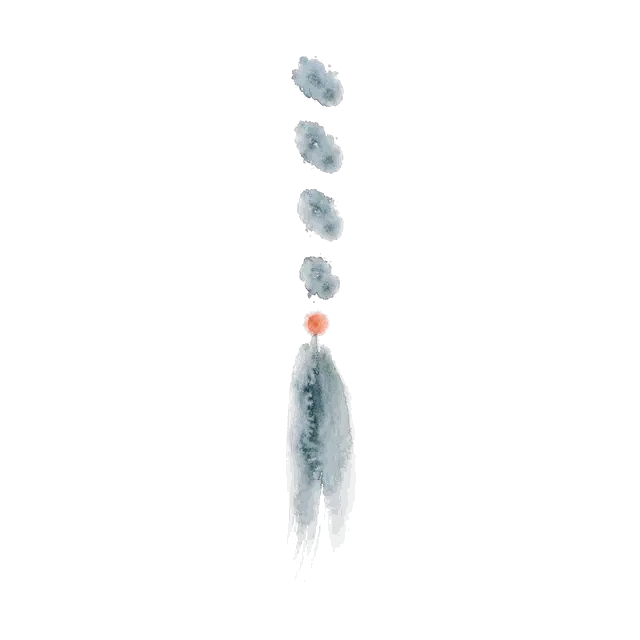
You breathe in with four equal sniffs, adding more air each time without breathing out in between. This trains precise control of the breathing muscles and focuses the mind. From Kundalini Yoga, it builds breath awareness and fine control of the diaphragm. The four-part inhale is followed by one long, smooth exhale.
The science behind it
A short hold after the inhale lets carbon dioxide rise a little in the blood. Together with the long exhale that follows, this activates the vagus nerve and the body's rest-and-digest mode. Your heart slows and you feel calmer. The clear pattern also gives your mind something to follow. This cuts down on repetitive thinking and helps calm your stress response.
Sources and references
-
Article
Relaxation techniques: Breath control helps quell errant stress response
Harvard Health Publishing
How breath control changes the nervous system's balance and reduces stress, with practical techniques explained for everyday readers.
-
Website
Deep breathing: Relaxation technique and benefits
Mayo Clinic
Clear, research-based guidance on belly breathing and paced breathing, with notes on their effects on the body and how to practice safely.
-
Book
The Polyvagal Theory: Neurophysiological Foundations of Emotions, Attachment, Communication, and Self-regulation
Stephen W. Porges
Key book on the vagus nerve and how its calming activity supports social connection, calm and balance. Useful for understanding how breathing affects the nervous system.
-
Book
Breath: The New Science of a Lost Art
James Nestor
A journalist explores breathing practices and recent science, with chapters on breath holding, tolerance to carbon dioxide, and how different breathing patterns affect you.
-
Podcast
Huberman Lab — Tools for Controlling Your Nervous System: Breathwork, Cold Exposure, and More
Andrew D. Huberman / Huberman Lab
Podcast episodes and notes on how different breathing patterns, including breath holds and slow exhales, affect alertness, calm and performance.
On each inhale cue, take one more sip of air. Four sips fill the lungs before the hold and long exhale.
Four short inhales, a brief hold, then one complete exhale.
How to practice
- Sit tall with a relaxed jaw.
- Take four short inhales through the nose, one after another, without exhaling.
- Each sip is about two seconds. Fill gradually, not forcefully.
- Hold gently with full lungs for 4.
- Exhale completely through the nose for 8.
- Rest briefly, then begin the next round.